


Imposter : Word Party Game
4.645.00 Reviews
App Specs
- Version
- 1.9
- Updated On
- License
- Free
- Downloads
- 50,000+
- Developer
- Codeva
- Categories
- Role Playing
- Platform
- Android
Screenshots
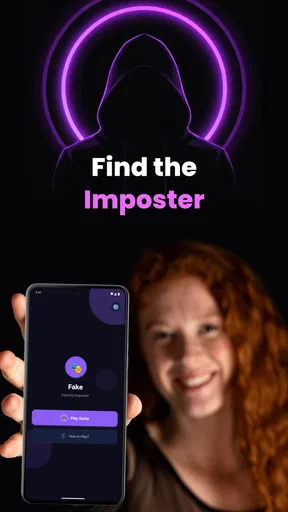
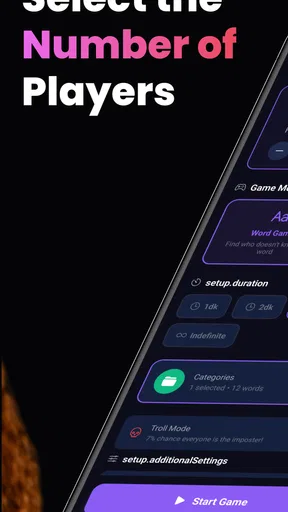
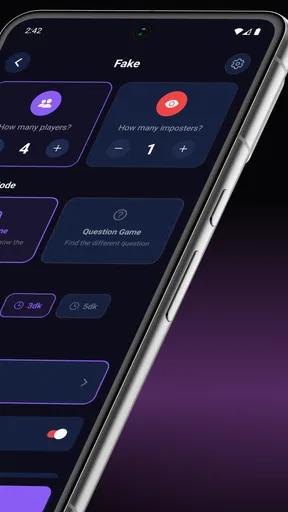
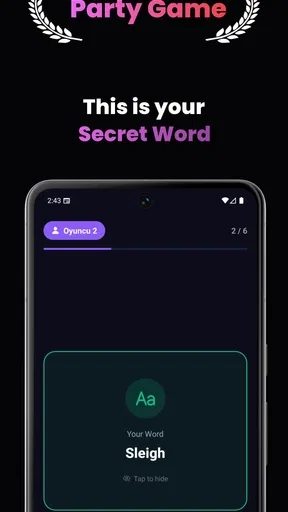

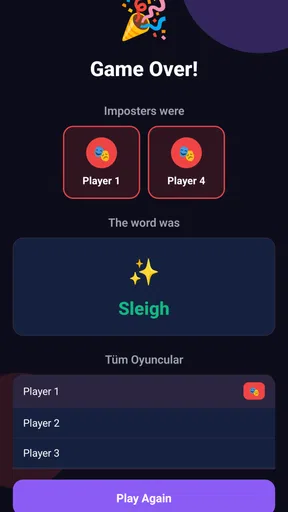
 Analysis by AppCompare
When I’m choosing a party game, I care less about elaborate rules than whether a group can get playing without turning the evening into a setup session. Imposter: Word Party Game is built around a quick social puzzle: most players work from one word while one person has to bluff their way through clues. That makes it a natural fit for a casual gathering, but its appeal depends on having people who enjoy talking, guessing and occasionally being caught out.
What the free price does—and doesn’t—tell you
The game is free to download, which makes it easy to try before deciding whether it deserves a regular place in your group’s rotation. It is a role-playing game from Codeva, rated Everyone, and its current version is 1.7. In-app purchases are listed at $4.99 to $29.99 per item, so the free starting point is not the same as a promise that every available option costs nothing. I’d treat the paid items as optional unless you already know what you want from them; there’s no reason to spend just to find out whether your friends enjoy the basic idea.
That distinction matters for a game you may only bring out now and then. A free install lowers the risk of testing it at a small gathering, while the purchase range is worth keeping in mind if you later consider paying for something. I wouldn’t judge the value by the highest possible item price alone, but I also wouldn’t assume a purchase is necessary to make a session worthwhile. Try the free experience first and let your group’s actual use decide whether paying makes sense.
Why the central idea works in a group
The strongest part of this format is that it turns a tiny difference in information into a social game. Players do not need to master a complicated character build or follow a long story. They need to listen closely, choose a clue that gives something away without giving everything away, and decide whether another person sounds like they know the word. That makes the conversation itself the main event rather than a screen full of action.
It can also suit a mixed group better than a rules-heavy role-playing game. Someone who rarely plays mobile games can understand the basic tension quickly, while people who like wordplay can enjoy trying to make their clues precise but not obvious. The catch is that the game depends on everyone taking part. If your friends would rather watch than speak, or if the group finds bluffing uncomfortable, the premise may not land as well.
Small choices that can make a round smoother
For a first session, I’d keep the mood light and agree that clues should be brief before anyone starts. That helps prevent one confident player from turning each turn into a speech, and it gives the imposter less time to study the table before responding. If the group is new to the format, focus on learning how the clues and guesses feel rather than trying to make every round a serious contest.
Word difficulty is another useful lever. Everyday terms are a kinder starting point when players have different ages or language confidence; more challenging vocabulary can be fun when everyone is comfortable with word associations. Custom word lists, where available, can make a session feel more relevant to a particular group, but I’d avoid references that only one or two people understand. A list built around shared memories can spark laughs; a list built around private in-jokes can leave others guessing for the wrong reason.
Worth Reading Before You Choose

EA SPORTS FC Mobile 26 Is a Bigger Football Game, but It Takes Time

Flipboard Shows What News Apps Must Do Beyond the Feed

Switching to Android Auto Means Rethinking Your Driving Routine

Google Calendar Makes a Crowded Week Easier to Manage

Ludo King Makes the Most of the Minutes Between Plans

Baby Panda World Brings Quick Play to Modern Phones, but Its Game Library Feels Busy
When another kind of party game is a better fit
Compared with a trivia game, this asks less about who knows the most facts and more about who can interpret a clue and read the room. Compared with a word puzzle played alone, it trades quiet concentration for conversation and bluffing. That is a useful difference if you want people looking up from their phones and reacting to one another, but it is not a universal upgrade: a trivia app is a better pick for a group that likes clear right-or-wrong questions, while a solo word game suits a quick break without coordinating a roomful of players.
It is also worth setting expectations about what “offline” means in practice. The game is presented as an offline party option, which suits friends sitting together, but that does not make it a substitute for a shared activity when nobody is in the same place. The online play mentioned in the published review may appeal to distant friends, though a group should settle how it will communicate before starting so that the conversation remains easy to follow. For a face-to-face night, the simple approach is to let the group gather first and use the game as a prompt for discussion, not as the whole evening’s entertainment.
A realistic use case is a few friends waiting for food at home, with everyone already gathered but nobody keen to start a long board game. One person can suggest a short round, explain the basic idea, and let the first clue cycle teach the rest. If the group is enjoying the guessing, keep going; if conversation drifts elsewhere, there is no need to force it. That low-commitment role is where I see the most practical value: it can fill a pause without demanding that the whole evening revolve around a single game.
There are limits to that convenience. A word-based bluffing game can lose energy if the same people dominate every discussion, if clues become too obscure, or if players treat a wrong guess as a personal failing. I’d rotate who speaks first when the group can manage it, and make it clear that playful suspicion is part of the game rather than a judgment of anyone’s honesty. Those small social choices matter more than any elaborate strategy, especially with new players.
There is also a practical question about who controls the device and how everyone gets their information. Before a round, agree on a simple handoff routine and make sure each player has a fair chance to see what they need without exposing it to the rest of the group. That avoids awkward pauses and accidental reveals. If managing a single phone becomes more distracting than the clues, a physical party game with its own cards may be a better fit for that particular gathering.
Getting Started
First things first, downloading Imposter: Word Party Game is a breeze. It's available on both Android and iOS, which means you can play it regardless of your device preference. The installation process was smooth, and within minutes, I was ready to dive into the game.
Once you open the app, you’re greeted with a sleek, intuitive interface. The vibrant colors and playful design immediately set the tone for a fun experience. Navigating through the menu is straightforward, making it easy to jump into a game or explore the settings. The app also offers a brief tutorial for first-timers, which is pretty handy to get a grasp of the rules.
The Gameplay
So, how does the game work? Well, it's pretty simple yet incredibly addictive. The game revolves around rounds where players are given a word. However, one player, the "imposter," receives a different word. The goal for the rest of the players is to figure out who the imposter is while the imposter tries to blend in undetected.
Each round, players take turns giving one-word clues related to their word. The challenge for the imposter is to give clues that fit both their word and the real word without raising suspicion. It's a fun balancing act that keeps everyone on their toes. The game also supports both offline and online modes, so you can enjoy it with friends near and far.
Features That Stand Out
One of my favorite features of the app is its versatility. Whether you’re in a room with a big group of friends or just a small gathering, Imposter: Word Party Game scales beautifully. It supports up to 10 players, making it perfect for parties.
The app also includes a variety of categories for words, ranging from simple everyday terms to more complex and challenging ones. This keeps the game fresh and exciting as you can tailor the difficulty to your group’s preference. Plus, there's an option to create custom word lists, which adds a personal touch to your game sessions.
Social Interaction and Replayability
What really makes Imposter: Word Party Game shine is how it encourages social interaction. It’s not just about guessing words; it’s about reading your friends, picking up on subtle cues, and sometimes just plain bluffing. The laughter and debates that ensue are what make the game genuinely enjoyable.
As for replayability, the app scores high. With the dynamic nature of the game and the endless combinations of words and clues, each session feels unique. It's one of those games you can keep coming back to without it feeling stale.
Deciding whether to keep it
People looking for a relaxed, conversation-led game are the clearest audience for this one. It can work for a family gathering, a casual evening with friends, or a break between other activities, provided the group is happy to speak up and play along. The Everyone age rating makes it suitable for a broad audience, although I’d still choose word categories with the actual players in mind rather than assume every group will enjoy the same difficulty.
If you prefer private, individual play, fast action, or a clearly competitive game based on skill and score, I’d look elsewhere. This is not the best choice for a quiet commute or for a group that wants a host to do all the work. Its central pleasure comes from people responding to one another, so a lively table helps more than an especially long session would.
Imposter has a 4.7 average from around a hundred ratings and has passed ten thousand installs, which gives a prospective player some evidence that others have tried it, though those figures cannot predict whether your particular group will click with it. It is free to start, with in-app items in the $4.99-to-$29.99 range. For me, that makes the sensible decision straightforward: install it without paying, try a round with people who enjoy wordplay, and only consider an optional purchase if you have a clear reason to do so.
Final Thoughts
In a nutshell, Imposter: Word Party Game is a delightful addition to any game night or social gathering. It’s easy to pick up, engaging, and packed with laughter-inducing moments. Whether you’re a word game enthusiast or just looking for something to spice up your parties, this app is definitely worth checking out.
So, what are you waiting for? Grab your friends, download the app, and start bluffing your way to victory. Just remember, in this game, being an imposter is half the fun!
Pros
- Engaging multiplayer experience
- Simple and intuitive interface
- Variety of word challenges
- Quick game sessions
- No intrusive ads
Cons
- Limited character customization
- Repetitive tasks after a while
- Occasional connectivity issues
- No offline mode available
- In-app purchases can be pricey
FAQs for Imposter : Word Party Game
What is Imposter: Word Party Game about?
Imposter: Word Party Game is a multiplayer social game where players must deduce who among them is the imposter. The game involves word-based challenges that require creativity and quick thinking. Players use clues and social deduction to identify the imposter before time runs out, making it an engaging experience for parties and gatherings.
How do you play Imposter: Word Party Game?
In Imposter: Word Party Game, players take turns being assigned secret roles, with one or more players designated as the imposters. The game involves completing word challenges and using clues to communicate. The goal for non-imposters is to identify the imposters, while imposters aim to remain undetected and sabotage the tasks.
Is Imposter: Word Party Game suitable for kids?
Imposter: Word Party Game is generally suitable for older children and adults, as it involves social deduction and strategic thinking. While the game is family-friendly, parents should be aware of the need for reading and comprehension skills. It’s recommended to review the game’s content to ensure appropriateness for younger kids.
Can you play Imposter: Word Party Game offline?
Imposter: Word Party Game primarily requires an internet connection as it is designed for online multiplayer interactions. However, some versions may offer a local multiplayer mode where players can connect over the same network. It's best to check the specific features of the app version you download for offline capabilities.
Are there in-app purchases in Imposter: Word Party Game?
Yes, Imposter: Word Party Game may offer in-app purchases. These can include cosmetic upgrades, additional game modes, or other enhancements to enhance gameplay. While the base game might be free, users should be aware of optional purchases that can provide a richer game experience.


